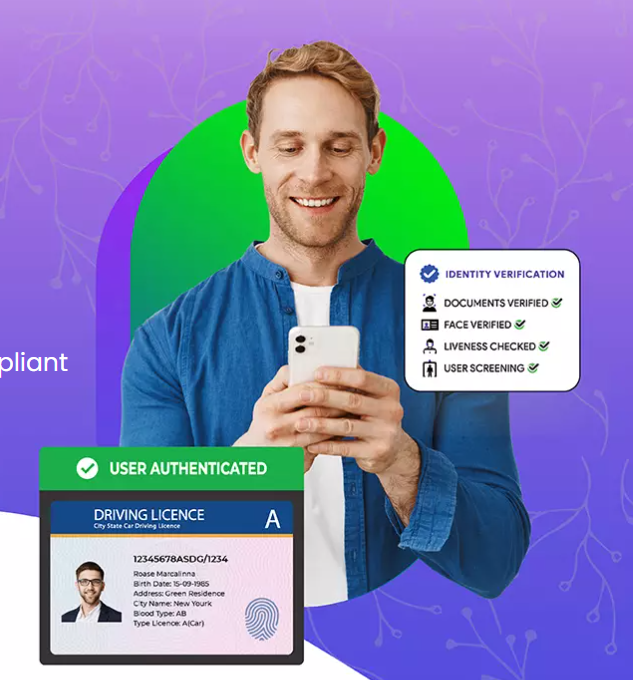
As digital services continue to expand, businesses need reliable ways to confirm that customers are genuine. Traditional identity verification methods can involve manual document checks, lengthy forms, and multiple verification steps. Modern technologies such as NFC identity verification and an identity verification service KYC are helping organizations create faster, more secure, and convenient onboarding experiences.
NFC identity verification uses Near Field Communication (NFC) technology to read information stored in compatible identity documents, such as biometric passports and certain national identity cards. When a user places an NFC-enabled document near a smartphone, the system can securely communicate with the document's embedded chip and retrieve relevant identity information.
Unlike simply taking a photograph of an identity document, NFC-based verification can provide access to electronically stored information that can help organizations validate the document and reduce reliance on potentially manipulated visual data.
The process is particularly useful for remote onboarding because users can complete verification through an NFC-enabled smartphone without visiting a physical branch.
Know Your Customer (KYC) procedures are essential for businesses operating in industries where customer identity and regulatory compliance are important. Banks, fintech companies, insurance providers, cryptocurrency platforms, and other digital services may need to establish that customers are who they claim to be.
An identity verification service for KYC can combine NFC document reading with other technologies to create a multi-layered verification process. For example, organizations can use document verification, NFC chip reading, facial comparison, and liveness detection as complementary checks.
This approach helps businesses establish stronger confidence in an applicant's identity while maintaining a streamlined digital onboarding journey.
One of the biggest advantages of NFC identity verification is data authenticity. Information retrieved directly from a document's embedded chip can provide an additional layer of confidence compared with relying only on images.
NFC verification can also improve the customer experience. Instead of manually entering extensive information, users can scan their compatible document with a smartphone, reducing data-entry requirements and potentially shortening onboarding time.
Another advantage is scalability. A cloud-based identity verification service can support large numbers of verification requests, making it suitable for businesses that need to onboard customers across different markets and channels.
NFC technology is powerful, but identity verification can become more robust when multiple signals are evaluated together. Businesses can combine NFC document verification with face match verification to compare the customer's live facial image with the photograph associated with the identity document.
Adding face liveness detection can further help determine whether the person completing verification is physically present rather than using a photograph, video, or other presentation attack.
Together, these technologies can create a layered identity verification workflow that supports stronger fraud prevention and more reliable KYC processes.
When selecting an identity verification service for KYC, businesses should consider factors such as document coverage, NFC compatibility, biometric capabilities, API integration, security controls, scalability, and user experience.
A well-designed solution should integrate smoothly into websites and mobile applications while allowing businesses to configure verification workflows according to their operational and compliance requirements.
NFC identity verification is becoming an important component of modern digital identity verification. By securely reading information from compatible identity documents and combining it with biometric technologies, organizations can build more reliable customer onboarding processes.
An effective identity verification service for KYC can help businesses balance security, fraud prevention, compliance requirements, and customer convenience. As digital transactions continue to grow, layered identity verification will remain an important foundation for creating trusted digital experiences.

This post has been authored and published by one of our premium contributors, who are experts in their fields. They bring high-quality, well-researched content that adds significant value to our platform.











Travel Journal is your source for travel inspiration, destination guides, helpful travel tips, and stories from around the world. Discover new places and plan your next journey with confidence.